Rakeback Reckoning: How Volume Grinders Turn House Fees into Hidden Profits
Written by Xander Foster · Apr 15, 2026
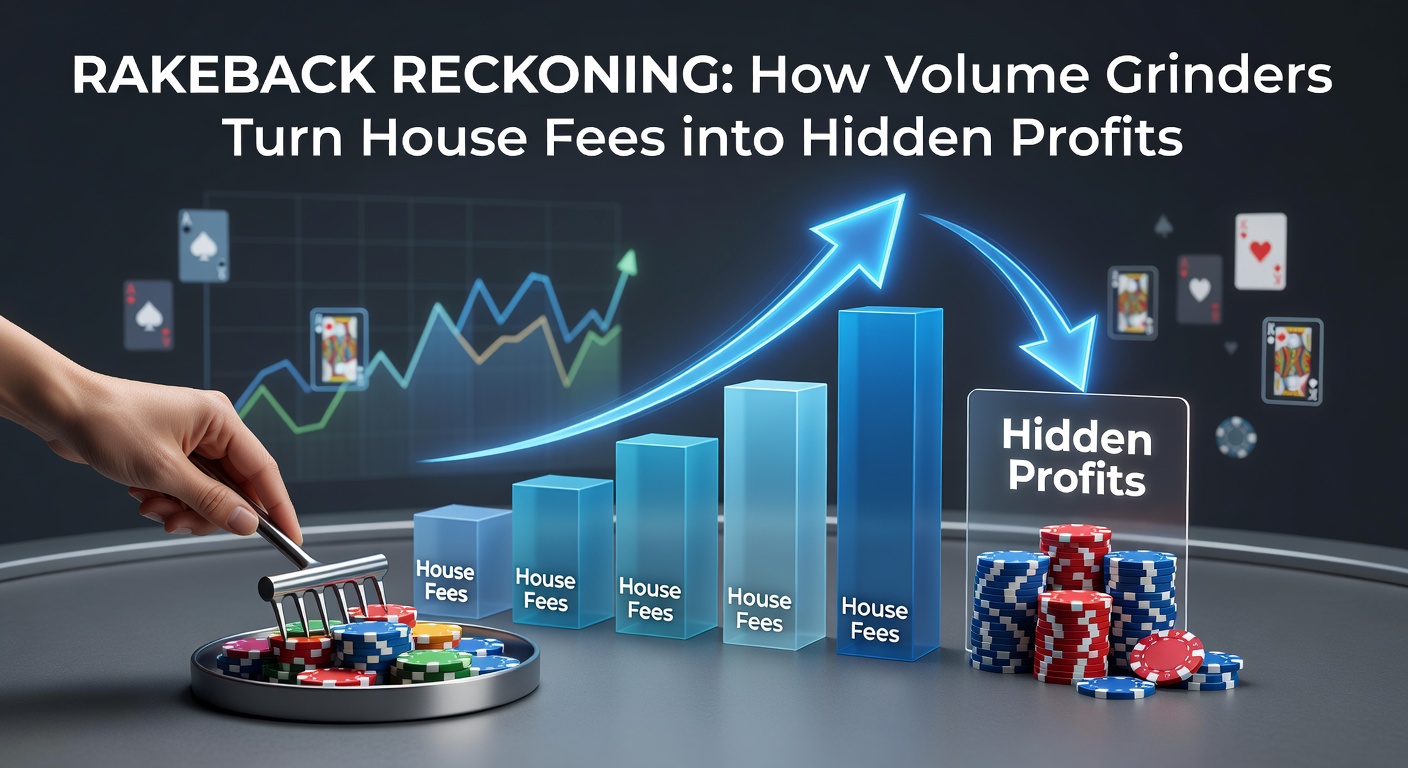
Rakeback Reckoning: How Volume Grinders Turn House Fees into Hidden Profits
The Basics of Rake in Online Poker
Online poker rooms generate revenue through rake, a small percentage skimmed from each pot in cash games or taken as an entry fee in tournaments, typically ranging from 5% to 10% capped at fixed amounts like $3 or $5 per hand; this fee covers operational costs, yet players who generate substantial volume find ways to reclaim portions of it. Data from industry trackers shows average rake per hand hovers around $0.50 to $2 in mid-stakes games, adding up quickly for those playing thousands of hands weekly, since high traffic sites like those in regulated markets process millions of pots daily. But here's the thing: while casual players barely notice these deductions, dedicated grinders turn the tables by leveraging return programs that redistribute rake back into their pockets.
Observers note how rake structures vary by stake level and format; low-stakes games often feature uncapped rake to encourage action, whereas higher limits impose caps to retain big players, and no-flop games like heads-up sit-and-gos carry distinct fees that can exceed 8% without limits. Turns out, this system incentivizes volume over win rates alone, as sites prioritize sustained play to maximize overall rake collection.
Rakeback Emerges as a Game-Changer
Rakeback deals return a percentage of generated rake directly to players, often 20% to 50% depending on the site and loyalty tier, calculated monthly or via points systems redeemable for cash; pioneered in the early 2000s, these programs exploded during the poker boom, with sites competing fiercely to attract volume players. According to figures from the Nevada Gaming Control Board, regulated U.S. markets saw rakeback adoption stabilize around 27% average returns by 2025, while offshore platforms push higher rates to draw international traffic.
What's interesting is how rakeback manifests: some sites offer straight cashback, others convert it through VIP tiers where points earned per rake dollar unlock escalating rebates, and hybrid models blend leaderboards with milestone bonuses; players track earnings via detailed dashboards that log every raked pot, making the process transparent yet addictive for those chasing monthly tallies. And while tournament rakeback, or "rebates," functions similarly on entry fees, cash game grinders dominate the high-return niche because pots resolve more frequently.
Volume Grinders: The Rakeback Powerhouses
Volume grinders, those relentless players logging 50,000 to 200,000 hands monthly across multiple tables, embody the strategy of outlasting the math rather than dominating foes; they thrive on multi-tabling software, playing 12 to 24 tables simultaneously at micro to mid-stakes, where win rates hover at 5 to 10 big blinds per 100 hands (bb/100). Experts have observed how these players prioritize table selection, session length, and bankroll depth over flashy bluffs, since their edge compounds through sheer quantity, turning a modest 3bb/100 win rate into substantial profits when rakeback supplements hourly earnings.
Take one grinder profiled in poker forums who ramped from 20k to 100k hands per month; by focusing on 6-max cash games at $0.25/$0.50 stakes, that player generated $2,500 in monthly rake while securing 35% rakeback, effectively netting $875 extra on top of winnings. People who've studied this niche know the drill: software like Hold'em Manager or PokerTracker dissects hand histories to optimize, revealing leaks that erode edges, yet the real magic lies in converting house fees into a steady revenue stream.
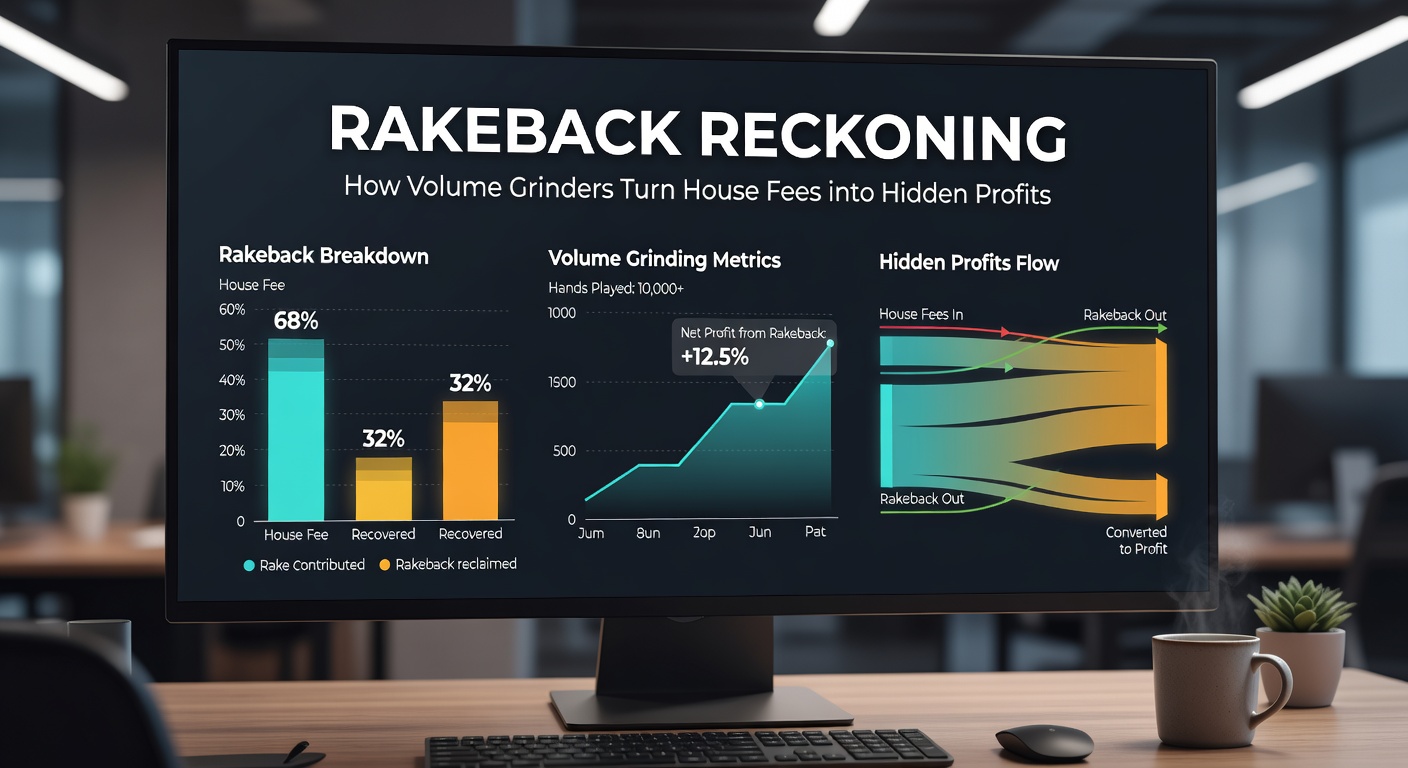
Decoding the Math: From Rake Paid to Profit Recovered
Calculations start simple: if a grinder plays 100,000 hands at $1/$2 stakes with $1 rake cap and 5% rate, total rake hits around $5,000 assuming average pots trigger the fee; at 40% rakeback, that's $2,000 returned, slashing the effective house edge from 5% to 3%, and when win rates factor in—say 7bb/100 yielding $1,400 in raw profit—the rakeback boosts total haul to $3,400 monthly. Data indicates top grinders achieve effective hourly rates of $20 to $50 after rebates, far outpacing low-volume players who forfeit these returns.
But here's where it gets interesting: tiered systems reward escalation, so a player hitting Platinum status might jump from 30% to 50% rakeback, while dealt rake models—common on legacy sites—base returns only on raked hands received, excluding pre-flop folds; researchers at poker analytics firms have crunched numbers showing volume grinders recoup 25-40% of theoretical losses to rake annually. Semicolons connect the dots here: high-volume means more points, more tiers, bigger rebates, creating a virtuous cycle that's not rocket science but demands discipline.
Real-World Examples and Tools of the Trade
One study from the Alcohol and Gaming Commission of Ontario analyzed licensed platforms, revealing grinders in regulated Canadian markets averaged $15,000 yearly rakeback in 2025, with multi-site players diversifying to chase best rates; consider Alex, a pseudonymous mid-stakes grinder who split volume across three sites, generating $8k rake monthly for $3,200 total return at blended 40%. Tools like rake calculators on sites such as SharkScope simulate scenarios, inputting hands, stakes, and rates to forecast earnings, helping grinders plot sessions.
Yet discipline reigns supreme; burnout looms for those pushing 16-hour days, and trackers flag downswings where rakeback provides the buffer, turning potential $2k loss months into break-even via rebates. That's the reality for pros navigating variance.
The 2026 Landscape: Trends Heating Up
As competition intensifies, April 2026 brings fresh dynamics with Ontario's market expanding post-iGaming launch, where new entrants offer 45% rakeback to lure U.S. exiles facing federal restrictions; Australian platforms, per industry reports, mirror this by boosting offshore deals amid local curbs, while EU sites experiment with crypto rakeback amid MiCA regulations. Figures reveal global volume up 15% year-over-year, driven by mobile apps enabling 24/7 grinding, and sites like ACR report record redemptions as grinders flock to Iron Man challenges for bonus multipliers.
Now, regulatory shifts add layers: Nevada's frameworks emphasize transparent rake disclosure, benefiting informed players, whereas Canadian oversight ensures timely payouts, stabilizing the ecosystem. Observers note hybrid loyalty programs surging, blending rakeback with cashback on deposits, fueling a grinder renaissance.
Challenges Grinders Face Despite the Edge
Variance strikes hard, even with rebates cushioning blows; a 10-buy-in downswing erodes banks, prompting pros to maintain 50-100 buy-ins deep rolls, and multi-accounting bans—enforced via IP tracking—punish site-hoppers, although savvy grinders rotate legally via VPNs where permitted. Software bans on heads-up displays (HUDs) reshape strategies, forcing reliance on memory and positional play, yet data shows adapted grinders maintain edges through sheer reps.
Health tolls emerge too: repetitive strain from endless sessions leads to breaks, with communities advocating 5-day weeks; still, the math endures, as one veteran grinder quipped in forums, "rakeback's the silent partner turning fees into fuel."
Key Takeaways: Rakeback's Enduring Power
Volume grinders master rakeback reckoning by amassing hands, climbing tiers, and calculating returns that eclipse casual play; data underscores how 100k-hand months yield thousands in hidden profits, reshaping poker economics amid 2026's regulatory flux. Platforms evolve, players adapt, and the cycle persists—proving house fees, when reckoned properly, fund the grind rather than drain it. Those diving in track meticulously, diversify wisely, and let volume do the heavy lifting.