Squeezing Value from Sit & Go Satellites: Smart Paths to High-Stakes Action Without Breaking the Bank
Written by Xander Foster · Apr 22, 2026
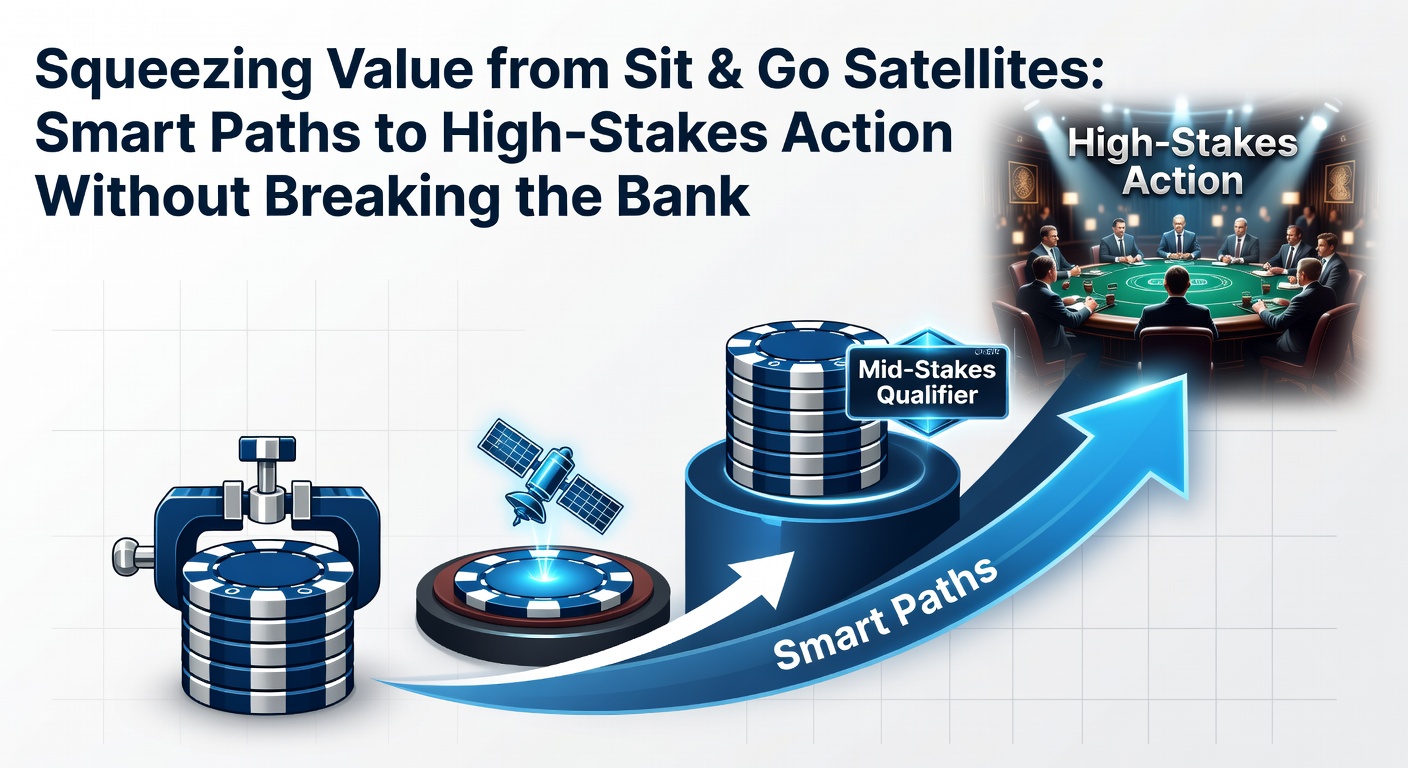
Squeezing Value from Sit & Go Satellites: Smart Paths to High-Stakes Action Without Breaking the Bank
Understanding the Satellite Landscape in Online Poker
Sit & Go satellites represent a cornerstone of online poker strategy, offering players seats in high-stakes tournaments for buy-ins as low as a few dollars, while direct entries to those same events often demand hundreds or thousands; this structure, which emerged prominently in the early 2000s, allows grinders and casual participants alike to chase massive prize pools without risking their entire bankrolls upfront. Platforms like PokerStars and partypoker host thousands of these daily, with formats ranging from standard nine-handed tables to hyper-turbo variants that wrap up in under 30 minutes, making them accessible even during short breaks.
But here's the thing: not all satellites deliver equal value, since payout structures vary widely—some award one seat for every two or three winners, others guarantee multiple entries plus cash add-ons, and data from major sites reveals that turbo satellites often boast higher win rates for skilled players due to their faster pace and looser early play. Experts who've crunched the numbers, including those analyzing PokerStars' public tournament histories, note how these low-cost feeders funnel thousands into events like the Sunday Million, where April 2026 schedules already feature satellites starting at $1 feeding into $215 buy-ins with overlays boosting effective ROI.
Mechanics That Make Satellites Tick
At their core, Sit & Go satellites operate like single-table tournaments that fill instantly upon registration, then race through blind levels until a predetermined number of players qualify for the target event; for instance, a $5 satellite to a $100 MTT might seat nine entrants, paying out three seats when one remains, thus creating an immediate 20x return potential on investment. Variations abound—step satellites require multiple wins to ladder up through qualifying rounds, while knockout formats add bounties for eliminated opponents, blending skill with variance in ways that reward aggressive playstyles.
What's interesting is how platforms tweak these to fit player preferences; GGPoker's recent April 2026 promotions, tied to their Omahageddon series, introduced satellites with rebuys capped at low levels, enabling bankrolls under $50 to secure $1,000 event seats, according to site-specific leaderboards tracking qualifier volumes. And while hyper-turbos compress decision-making into minutes, forcing folds or shoves based on stack sizes rather than deep-stack nuance, observers point out that this format levels the field for those mastering independent chip model (ICM) calculations on the fly.
Selecting the Right Satellites for Maximum Edge
Players who thrive in this niche zero in on overlays first—those tournaments where prize pool value exceeds buy-ins due to unmet guarantees—and tools like SharkScope aggregate data showing how evening satellites on U.S.-facing sites like WSOP.com often feature 20-30% overlays in April 2026, driven by weekend traffic spikes. Selection criteria extend beyond that, though; high-traffic times yield softer fields filled with hopefuls rather than pros, while multi-entry satellites let grinders register multiple times to boost implied odds, a tactic data indicates lifts qualification rates by up to 15% for volume players.
Take the case of a mid-stakes grinder profiled on PokerNews strategy forums, who parlayed $3 daily satellites into 12 seats for a $500 event over one month, netting $4,200 in value against $90 invested; such stories highlight how filtering by ROI metrics—available via free trackers—uncovers gems like partypoker's 50% rakeback satellites, where house fees effectively shrink buy-ins further. Yet success hinges on avoiding oversubscribed feeders, those with 10:1 player-to-seat ratios that balloon variance sky-high.
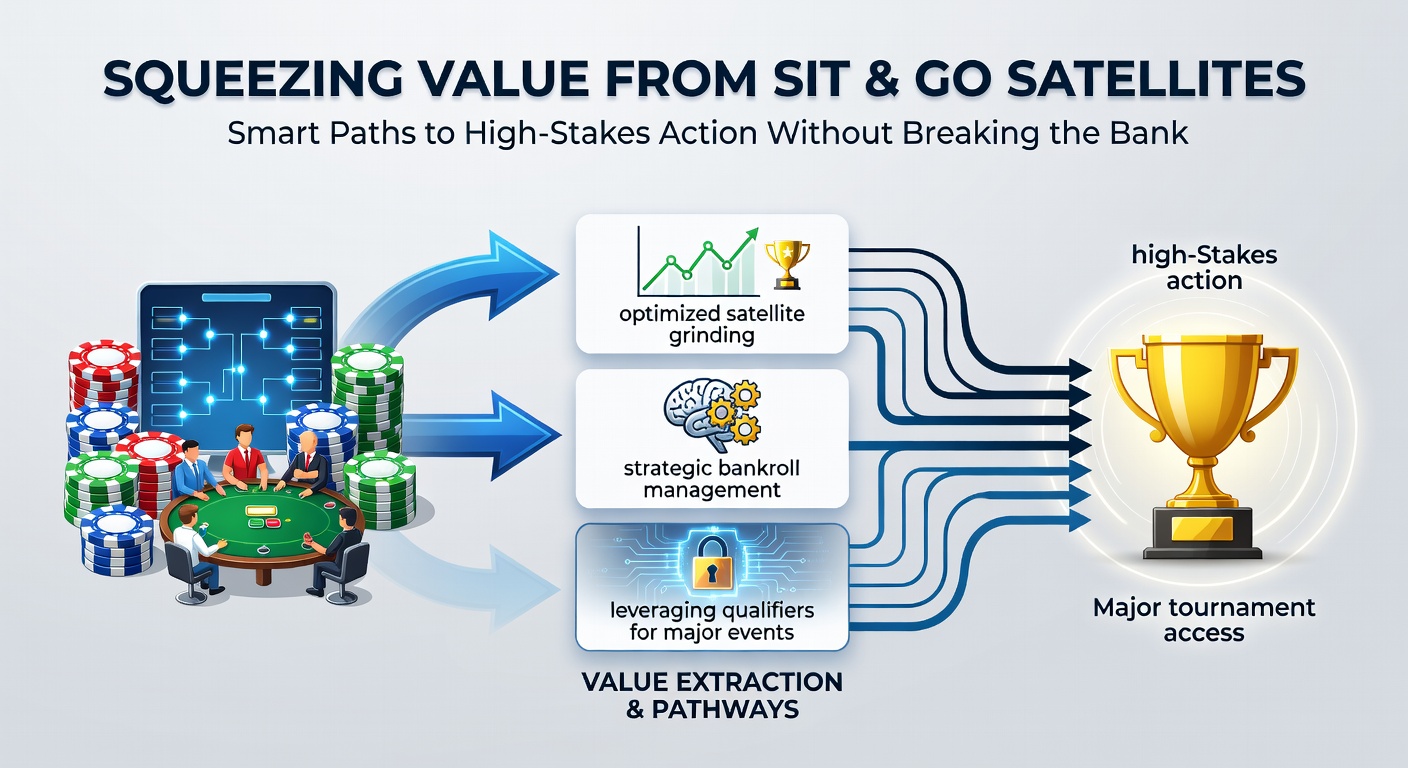
Strategic Playstyles That Squeeze Out Wins
Early stages demand patience amid loose action, where limpers and speculative calls proliferate, but experts advocate isolating weak ranges with position-aware raises, turning dead money into blinds that build stacks without showdowns; as blinds escalate in turbos, though, the shift to push-fold charts becomes paramount, with solvers like PioSOLVER confirming that Nash equilibrium deviations exploit recreational tendencies. One study from the Nevada Gaming Control Board's poker analytics—drawing from licensed operator data—reveals skilled players claim 12-18% ROI in satellites versus 5% field averages, underscoring discipline's role.
But here's where it gets interesting: final table ICM pressure alters everything, since bubble play rewards those hoarding chips for seat locks, while short stacks lunge for double-ups; real-world examples from April 2026's ACR Poker satellites to their Venom series show top qualifiers nursing 10BB stacks through cautious orbits, only exploding post-bubble with calculated hero calls. Multi-tabling amplifies this edge too, as software like Hold'em Manager tracks hot streaks across 20+ tables, letting grinders cherry-pick peak-performance satellites.
Bankroll Management and Variance Taming
Satellites embody high-variance poker distilled, where 50-buy-in downswings hit hard despite positive edges, so those who've mastered the game allocate just 1-2% of bankroll per entry—say $200 rolls grinding $3 sats—and track results via spreadsheets logging win rates against benchmarks like 25% ITM for nine-handed formats. Tools such as ICMIZER simulate thousands of spots, helping calibrate risk, while data from Ontario's regulated platforms under the Ontario Lottery and Gaming Corporation indicates that disciplined players weather streaks averaging 30 tournaments before breakeven.
And yet, promotions sweeten the pot; April 2026 loyalty programs on sites like 888poker offer satellite rebates or freerolls for recent qualifiers, effectively halving effective buy-ins for repeat entrants, a factor that turns marginal plays profitable over volume. Observers note how pros hedge by selling seat portions on forums post-win, converting variance into steady cash while reserving spots for high-equity runs.
Case in point: a Canadian grinder documented on industry trackers turned $500 into $15,000 in seat value via a step satellite ladder during March 2026, cashing two seats outright and laddering the third to a $10k event; such paths illustrate how stacking small wins compounds without bankroll annihilation.
Navigating High-Stakes Access Via Low-Cost Feeds
Stepping up means targeting feeders to marquee events—think $22 satellites to $1,000 WPT Online seats or $50 ones for SCOOP main events—where April 2026 calendars burst with options, including GGPoker's GGOnline Championships satellites overlaying guarantees nightly. Platforms innovate too, with progressive knockouts blending bounty hunts into qualifiers, yielding cash plus seats that data shows outperform pure seat-only formats by 8-10% in total value.
That's where the rubber meets the road for aspiring high-rollers; multi-flight satellites, like those feeding WSOP.com's summer series prep, allow phased entries mitigating single-session blowups, while global fields mix U.S., EU, and Asian traffic for diverse dynamics. Players often discover that chaining satellites—winning a $5 into a $50 final—multiplies leverage exponentially, turning pennies into high-stakes shots sans direct buy-ins.
Conclusion
Sit & Go satellites stand as proven conduits to high-stakes poker, blending low barriers with strategic depth that data consistently affirms for those honing selection, play, and management; April 2026's bustling schedules underscore their vitality, from daily micros to championship feeders, offering paths where smart grinding yields outsized returns. Figures reveal sustained edges for volume players, while innovations like overlays and rebates keep the value flowing, ensuring this format endures as poker's great equalizer.